
For years, the word “investing” conjured images of Wall Street suits, complex transactions, and million-dollar portfolios. It felt like something reserved only for the ultra-wealthy or finance experts. Like many, you might have planned on simply saving money in a bank account, feeling a touch of naivety about the power of inflation and compounding.
It’s time to stop taking the “ostrich approach”—hiding your head from what you don’t understand. The truth is, investing is easier than ever, and you absolutely do not need a financial degree or a ton of money to start.
Thanks to modern technology, buying stocks can be as simple as buying an item on Amazon. This guide breaks down the myths, highlights the critical concepts, and shows you exactly how to get started.
1. Smash the Myths: You Can Start Today
Two major myths keep beginners from taking the leap:
- Myth 1: You need sound knowledge about the market and finance.
- Reality: While knowledge is a bonus, it is not a requirement. Newbie investors can succeed by sticking to simple, broad-market strategies.
- Myth 2: You need a ton of money to even get started.
- Reality: You can literally start with spare change! Many apps offer fractional shares, allowing you to buy small pieces of expensive stocks (like Apple or Google) for just a few dollars.
The hardest step is the first one. Once you build a consistent habit, you’ll find the process of growing your money exciting and financially responsible.
2. The Power of Time: Why Starting Early Matters
If you only remember one thing about investing, let it be this: Time is your most valuable asset.
When it comes to building wealth, three factors play a major role: Amount of Money, Return Rates, and Time. Since you’re a beginner, you might not have millions to invest, and return rates are out of your control. This leaves Time as the variable you must maximize through Compounding.
Understanding Compounding: The 8th Wonder of the World
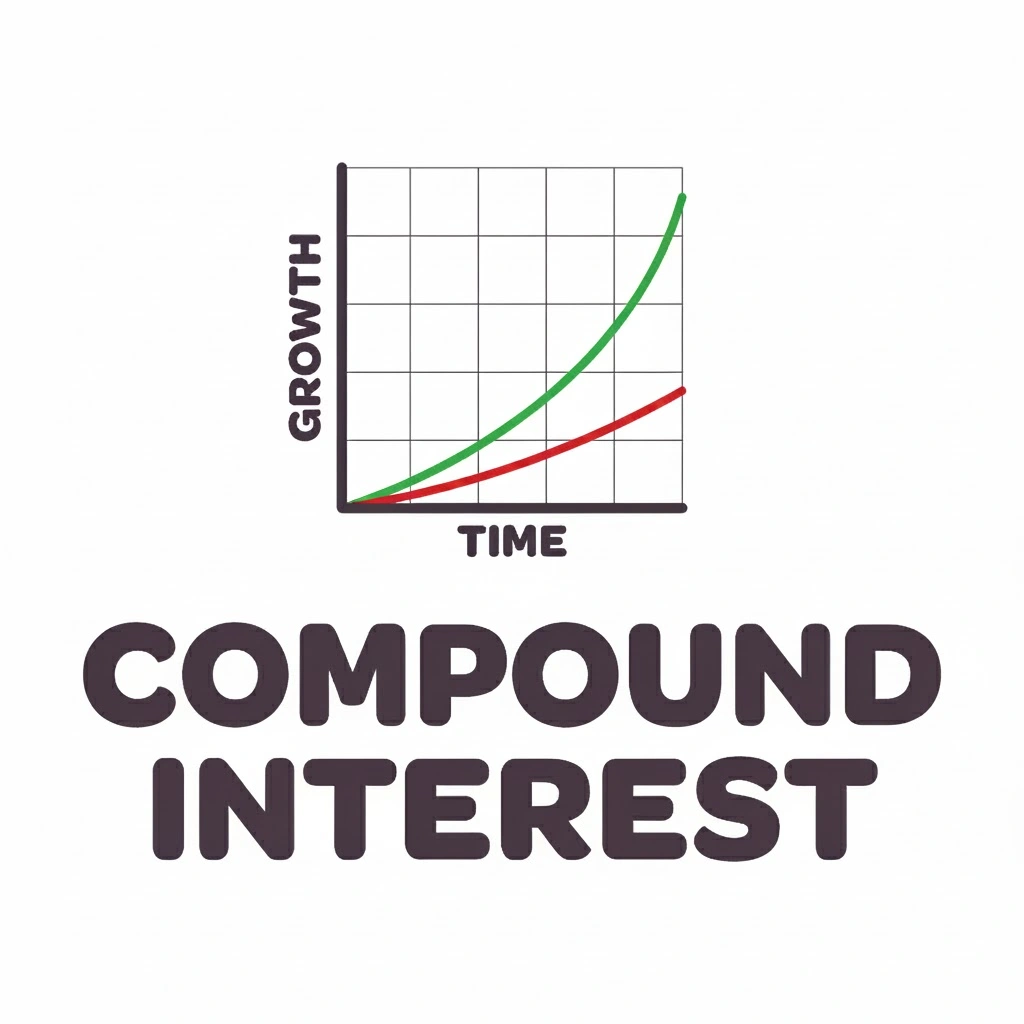
Compounding is the process where your investment returns begin to generate returns of their own. Your money starts making more money, and it all accumulates under your umbrella.
As Albert Einstein famously said, “Compound Interest is the 8th wonder of the world. Those who understands it, earns it; those who doesn’t, pays it.”
| Investor | Starting Age | Years Investing | Final Value (Example) |
| Alex | 20 | 45 | $246,000 |
| Olive | 30 | 35 | $141,000 |
This example assumes a $5,000 initial investment, $1,200 annual contribution, and 5% quarterly compounding return.
Alex retired with almost twice the amount of Olive, simply by starting 10 years earlier. It’s never truly too late, but the message is clear: The best time to start investing was yesterday; today is the next best thing.
The Silent Killer: The Effects of Inflation
Another critical reason not to simply save money is the effect of Inflation.
Inflation means the cost of goods and services increases over time, which causes the value of money to decrease. The $100 you save today will buy significantly less 20 years from now. If your money is sitting in a standard savings account earning 1% or less, inflation is actively cutting your savings’ purchasing power every year. Investing is essential to ensure your money not only maintains but grows its value.
3. What to Invest In: Simple Options for Beginners
You don’t need a complex portfolio to start. Focus on these accessible options:
Stocks (Individual Shares)
A stock is a unit that represents a fractional ownership share of a company. When you buy a stock:
- You profit if you sell it later at a higher price (capital appreciation).
- You may receive Dividends—a small, regular payment from the company to its shareholders, usually paid quarterly.
ETFs (Exchange-Traded Funds)
This is the perfect starting point for beginners because they provide instant diversification.
- An ETF is a collection of different stocks that you can buy as a single entity.
- Instead of buying one company’s stock, buying an ETF means you are betting on the success of hundreds or thousands of companies at once.
- A great example is the Vanguard S&P 500 ETF (VOO), which tracks the performance of the top 500 companies in the US. By buying one share, you are invested in 500 successful companies, significantly reducing your risk.
4. Crucial Mistakes to Avoid
Long-term success isn’t about picking winners; it’s about avoiding these common pitfalls:
A. Starting Late
As proven by the compounding example, the opportunity cost of delaying your start is enormous. Do not wait for the perfect financial moment—start now, even if it’s small.
B. Impatience: Trying to “Time the Market”
New investors often panic when they see prices drop. This leads to selling low, which is the exact opposite of what you should do.
- You cannot time the market. No one consistently guesses the daily highs and lows.
- Strategy: Buy and Hold (Long-Term). Growth in the stock market is never linear, but historically, investing in promising companies and holding them for many years pays off exponentially.
- Tax Benefits: In the US, holding an investment for more than one year qualifies profits as long-term capital gains, which are taxed at a significantly lower rate (0%, 15%, or 20%) than short-term gains (up to 37%). A long-term approach is often much more profitable after taxes.
C. Investing in What You Don’t Understand
Do not blindly invest in assets (like Real Estate or niche cryptocurrencies) just because you heard a tip. If you have zero knowledge, stick to a well-known, diversified option like a Vanguard S&P 500 ETF (VOO). This way, you are betting on the entire US economy, not a single speculative company.
5. Saving vs. Investing: Finding the Balance
Why settle for a bank’s 1.3% APY when the bank is lending your money out for 5%, 7%, or even 20%+? The majority of people choose saving because of one word: Risk.
The solution is not to choose one over the other, but to prioritize:
- Build Your Safety Net (Saving): Your first priority must be an Emergency Fund (3–6 months of expenses) in a safe, accessible, high-yield savings account. This is your safety net against financial catastrophe.
- Grow Your Assets (Investing): Once your emergency fund is complete, use any extra money that you won’t need anytime soon to build your investment portfolio. This money is dedicated to long-term growth.
Do not try to grow your savings account past your emergency fund target; instead, grow your assets (stocks, ETFs, etc.) for a more significant Return on Investment (ROI).
Next Steps: How to Start Right Now
Getting started is simple with today’s technology. You can literally fund your investment with spare change.
- Choose a Brokerage App: Use a beginner-friendly platform like Webull, Betterment (a “Robo-advisor” that automates investments for you), or Public (a platform that offers fractional investing).
- Deposit a Small Amount: Deposit just $100 into your account to get past the minimums and take advantage of any sign-up bonuses.
- Make Your First Purchase: Buy a fractional share of a broad market ETF (e.g., VOO or any index fund).
- Set a Monthly Habit: Automate a small, consistent transfer every month.
It all seems complex until it’s done. Once you get the hang of it, you’ll enjoy the liberating feeling of taking control of your financial future.
Final Thoughts on Starting Your Investment Journey
The most important takeaway is this: Don’t let perfection be the enemy of progress.
The biggest barrier to building wealth isn’t a lack of money or market knowledge; it’s inaction.
- Stop being an Ostrich: The market is accessible, not just for the wealthy.
- Time is Gold: Start today, even with $50. The power of compounding makes starting early far more valuable than trying to invest a massive amount later.
- Keep it Simple: Focus on consistent contributions to diversified, low-cost options like ETFs.
- Be Patient: Ignore the daily noise. Your goal is long-term growth, not short-term speculation.
The feeling of having your money work for you is incredibly empowering. Take that first step, stay consistent, and let time do the heavy lifting.